
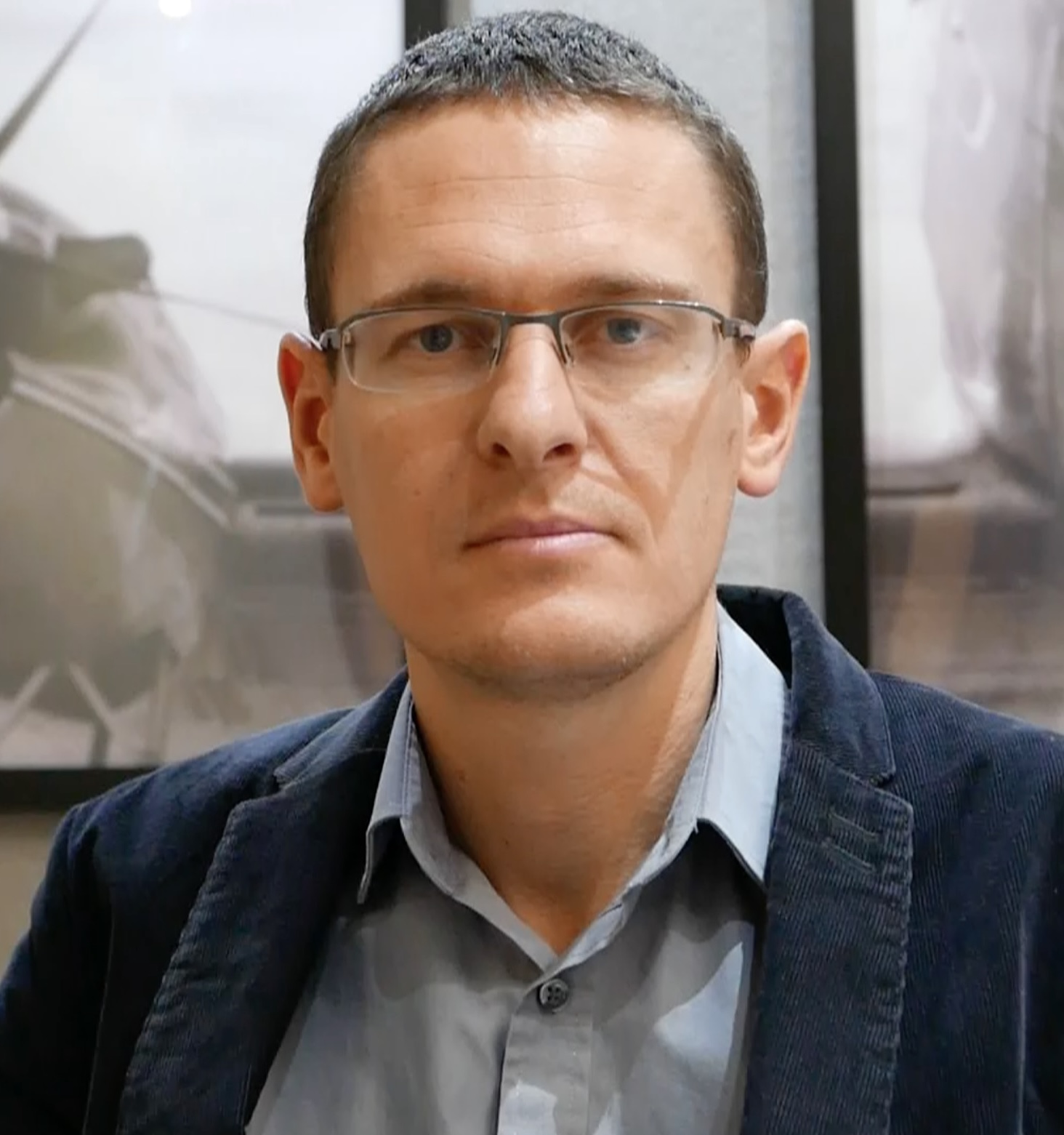
Yosef Akhtman
Biography
Yosef Akhtman is an Associate Professor at the Faculty of Space Technologies, AGH University of Krakow, Poland, where his research is focused on Artificial Intelligence and Data Engineering pertaining to applications in Earth Observation and Remote Sensing. He is a founder of Gamma Earth, provider of satellite imaging enhancement solutions, as well as Gamaya, a Swiss Economic Award-winning Swiss startup in the field of smart farming enabled by hyperspectral imaging, computer vision and AI. Before establishing Gamaya, he carried out international applied research projects in the UK and Switzerland, spanning the subjects of remote sensing, mobile robotics and environmental monitoring. Yosef has a B.Sc. degree in Mathematics and Physics from the Hebrew University of Jerusalem, Israel, and a Ph.D. in Electronics Engineering from the University of Southampton, UK.
The Frontiers of Knowledge in the Age of AI: From the Foundations of Mathematics to Earth Observation
Abstract: What do we actually know about the world we inhabit? What do we think we know, but actually don’t. This seminar uses AI-based super-resolution in remote sensing and Earth Observation as a practical entry point into a deeper question: what makes scientific knowledge possible, and where do its limits really lie? We will begin with modern AI systems that infer high-resolution structure from low-resolution satellite observations, showing how technological progress often depends on constraints, priors, and hidden assumptions rather than unlimited information. From there, we will discuss the foundations of mathematics and science itself: the assumptions behind number, infinity, physical law, measurement, objectivity, and the role of observer’s frame of reference. Drawing on recent insights on relational finitude, the illusion of absolutes, and the metaphysical commitments hidden inside formal definitions, we will examine how scientific intuition is shaped by cognitive horizons, historical ego-centrism, and inherited abstractions. The central message is that technology advances precisely when we learn to question the boundaries that earlier frameworks treated as fixed. Super-resolution is therefore not only an imaging technique, but a case study in how science sees beyond its own inherited resolution.